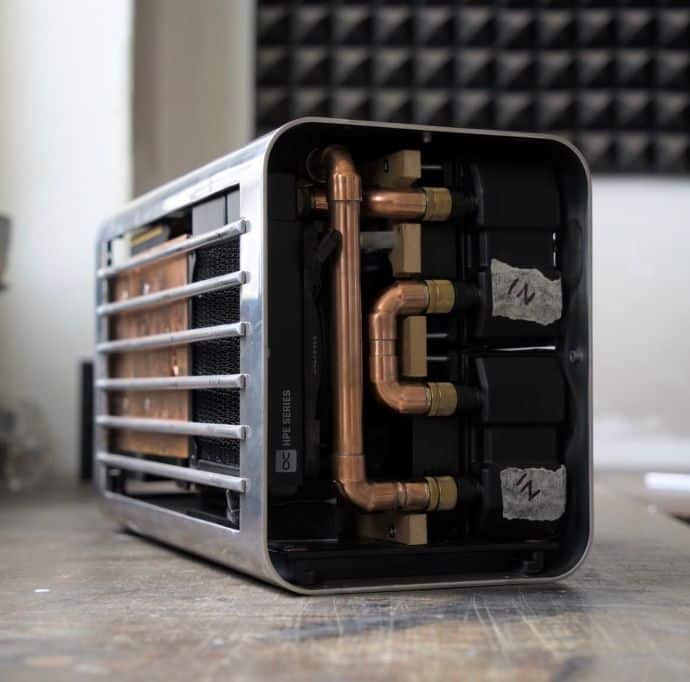
Have you heard of Billet Labs? These two Englishmen have caused quite a stir on several occasions. From their Toaster PC to the one built under a cast iron radiator, nothing can stop them. Along the way, we will even encounter a wall-mounted computer called Wall-y.
We had the chance to chat with Felix, one of the company’s founders. We talked about PC modding, water cooling, but also a little bit about nail polish and mechanical puzzles. Portrait of an inspiring creator.
The origins
OCC : So, before we talk about the fact that you’re building a computer in a 100-year-old radiator… how did it all start? Where does Billet Labs come from?
Felix: Billet Labs started a few years ago because I wanted to build a new computer, in my own style, and nothing that existed really fit the bill. I had a lot of free time back then (which I miss a little!). So I decided to turn it into a business. My background is in high-end machined products, and the other founder’s background was in PC building. We brought those two worlds together. And that’s essentially what Billet Labs is all about: creating PC art pieces that are beautiful, pleasant to the touch, extremely high-performance, and brilliant objects.
OCC: What was Billet Labs’ very first project?
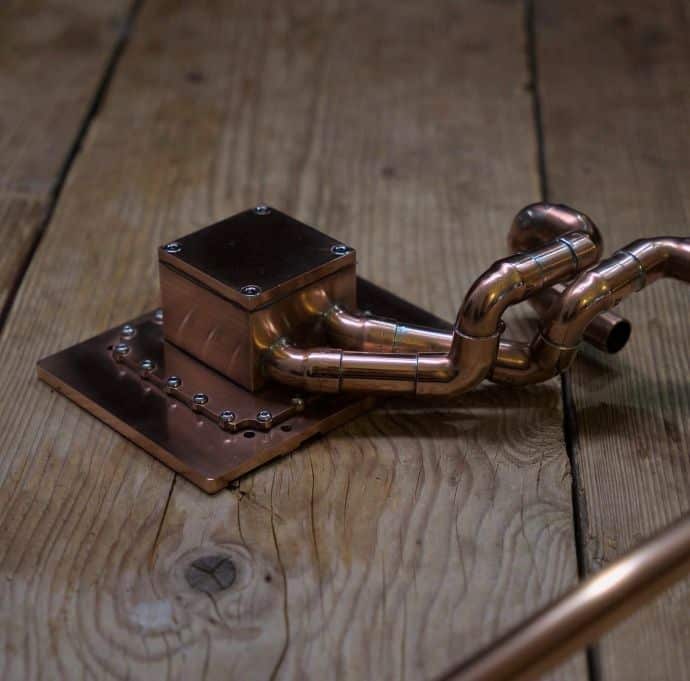
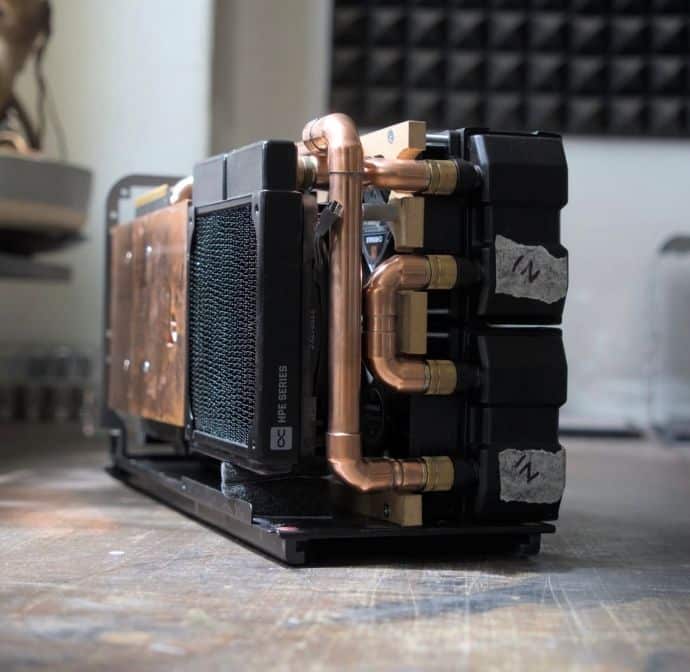
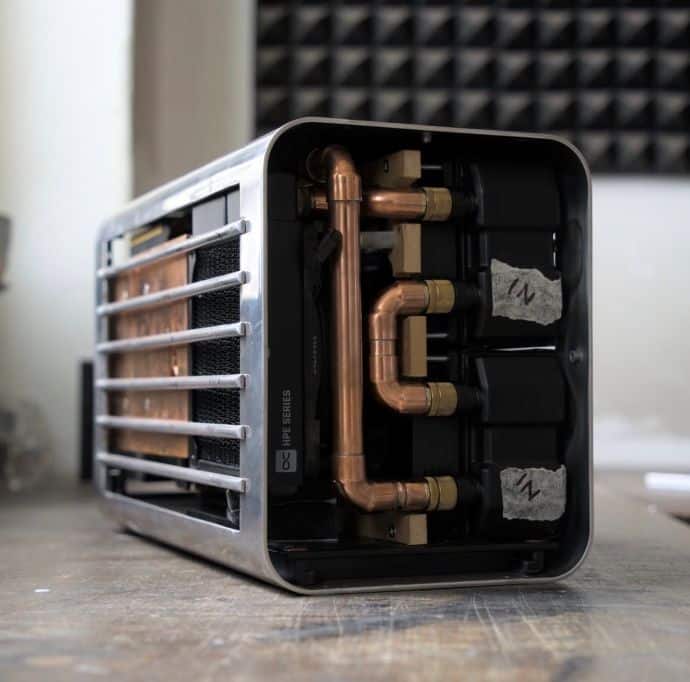
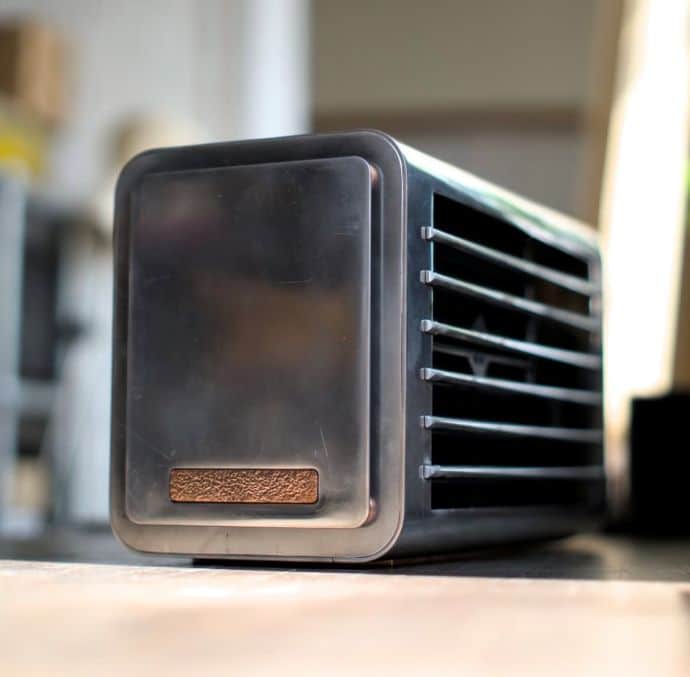
Felix: The first project was the design of the Monoblock, which took about a year. Then came the first PC, ” The Toaster,” which was also our first YouTube video . It showcased the Monoblock and, I hope, our unique modding style.
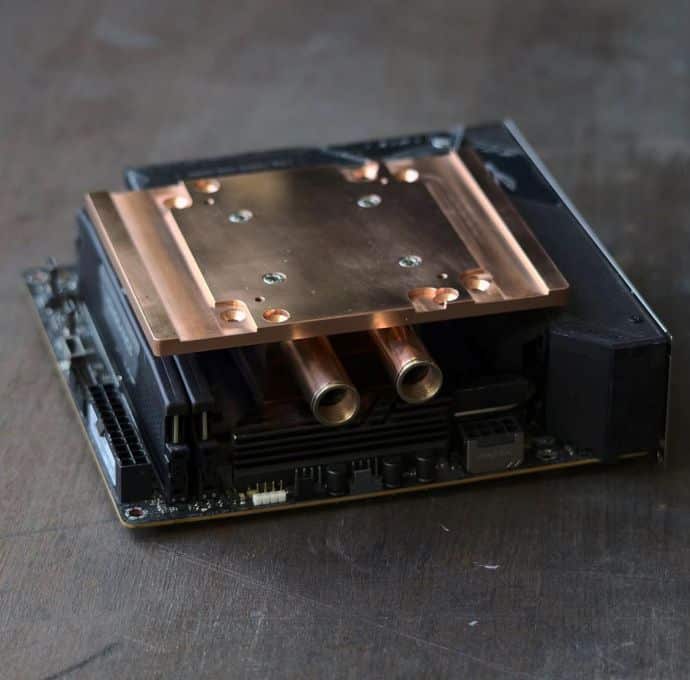
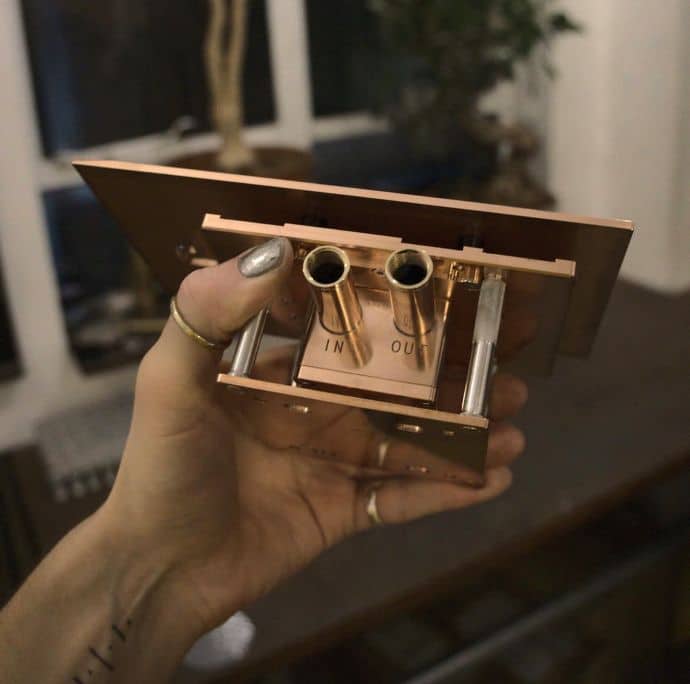
The famous Monoblock Felix refers to was a one-of-a-kind piece designed to cool CPUs and GPUs in a Small Form Factor configuration. It was a particularly ambitious project that received a lot of attention. The “Toaster” was a client project. We ask for news about it.
OCC: Any news on the Toaster? Is it still working?
Felix: It ‘s still working perfectly, absolutely no problems. I spoke with the buyer last week.
OCC: Do you source all your supplies from the UK?
Felix: We design everything in-house here in Wimbledon, and everything we make is machined in the UK, then finished and assembled by hand by us.
A multi-talented modder
Felix is the main face of Billet Labs on social medias. The company has enjoyed significant success on all platforms. What was intended to be a promotional tool seems to have become an activity in its own right: detailed assembly videos and tutorials, progress reports, tests, but also doubts, twists and turns, and a whole range of content related to Billet Labs’ products .
OCC: Can you tell us a little more about yourself?
Felix: Billet Labs is one of three companies I own. The first is www.felixure.com, where I create mechanical puzzles, and the second is www.snailworks.store, where we manufacture and sell nail polish and reactive pigments. In short, I do everything that involves making things that interest me. This is also true in my personal life: I like working on cars, motorcycles, etc., and I do a lot of DIY. I’m also a big gamer; Halo 3 and the old Pokémon games are among my favorites. With the new gaming PC I’m working on, I’m looking forward to trying out newer games that I haven’t had much time to play yet.
OCC: Do you consider yourselves influencers? How do you perceive your presence on social media?
Felix: We started YouTube, Instagram, and TikTok to promote our products, but as the views kept increasing, it became clear that the social aspect was also a very important part of the business. We’re very proud of the content we produce. And it seems to encourage people to experiment more with their own PC builds. So yes, I guess we are.
OCC: Do you also offer custom services?
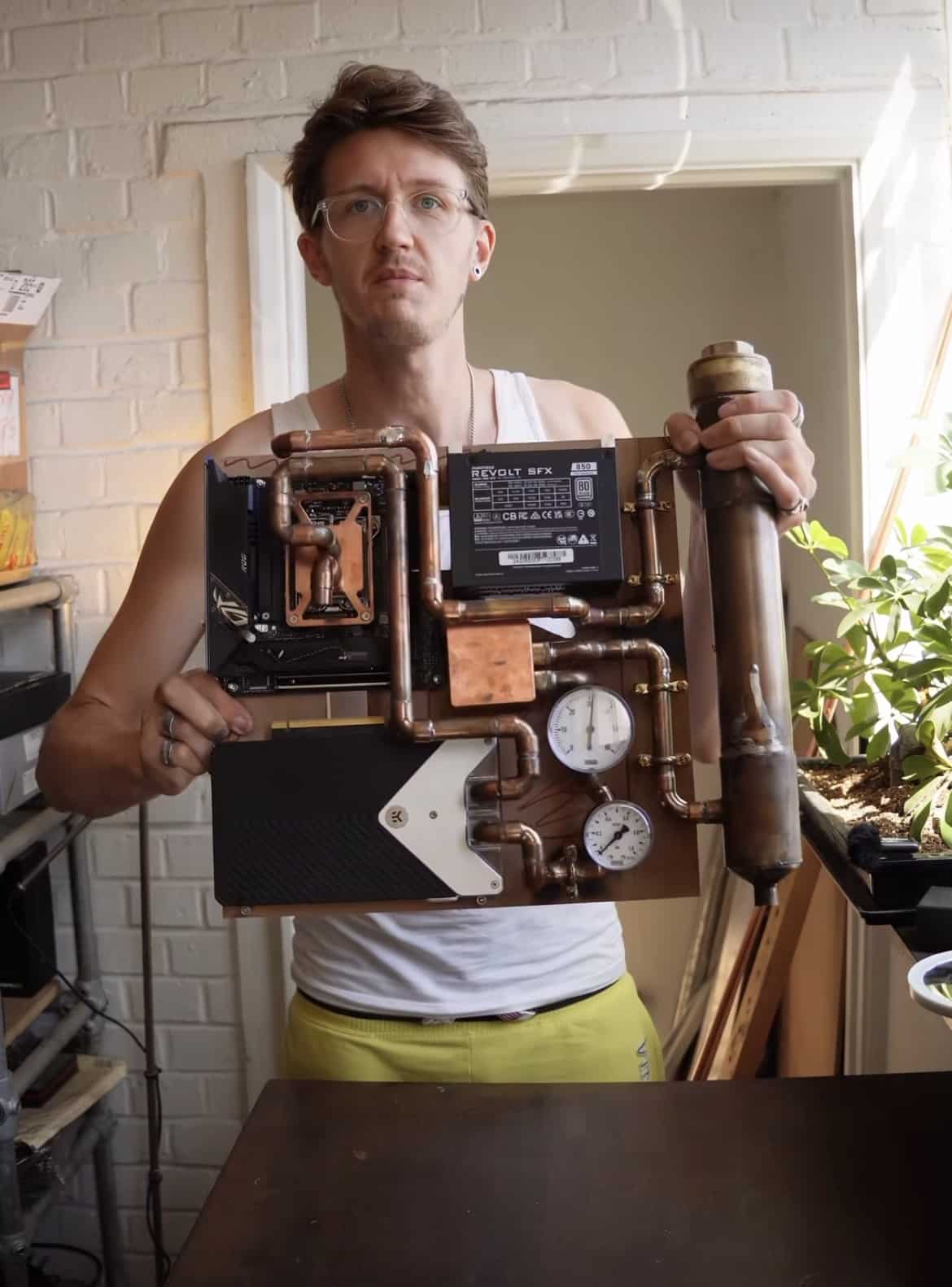
Felix: We do offer custom builds, but right now I’m the only one assembling PCs here, so we can only produce about two per year. I also kept the last PC (Wall-Y) and will keep the current project (the radiator—that’s not its final name), which limits our production for now. We’re still in a phase where we’re discovering our style and processes, and we want to create the PCs we want to make. So it’s difficult to find a buyer in advance when neither they nor we really know what the final product will look like. We have already sold one finished PC at auction (The Boiler), and this is probably how future builds will proceed until we have slightly more standardized, reproducible PCs.
… Which will probably never happen! We quickly realize that Felix refuses to rest on his laurels and is constantly seeking out new ideas. We also sense a genuine desire to share his knowledge.
OCC: It feels like you’re constantly learning from one project to the next, doesn’t it?
Felix: Absolutely. We try to do something new with every build: use a new manufacturing process, a new material, a new component, a new type of fan, a new type of connector, or even just a part from a company we’ve never worked with before. We gradually accumulate knowledge about what works and what doesn’t, what’s simple and what’s complicated, what looks good and what doesn’t.
News from Billet Labs
Finally, we come to the latest news from the British company. And we have to talk about that huge cast iron radiator we saw on social media.
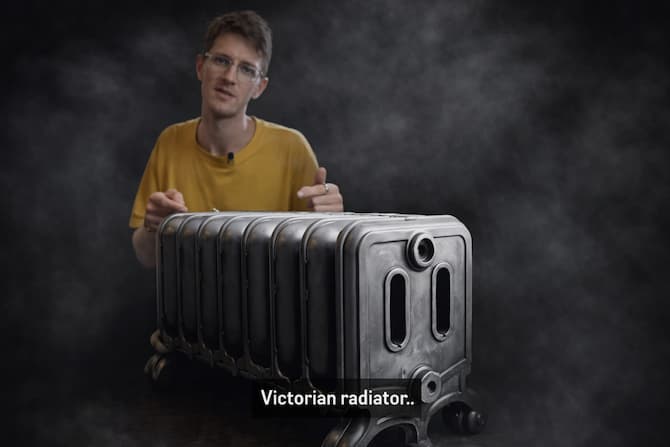
OCC: This new project: the cast iron radiator. Can you give us some information? What’s the plan?
Felix: I know that some people have already tried (and succeeded) to integrate PCs into cast iron radiators, but to my knowledge, no one has made one that really lasts. So the main goal was to create a USABLE radiator PC that I could run until the hardware became obsolete. I’ve always loved the look of cast iron radiators, and in many ways, they’re not that different from a PC radiator (if you ignore galvanic corrosion, rust, size, weight, compatibility, etc.).
What I like to do in our builds is to stop thinking that only PC parts can be used in a PC. If you have the ability to make something work and you want to do it, then you should do it. The plan is basically to build a complete SFF PC under the radiator, connect it to the input and output ports, solve the corrosion and rust issues, and play.
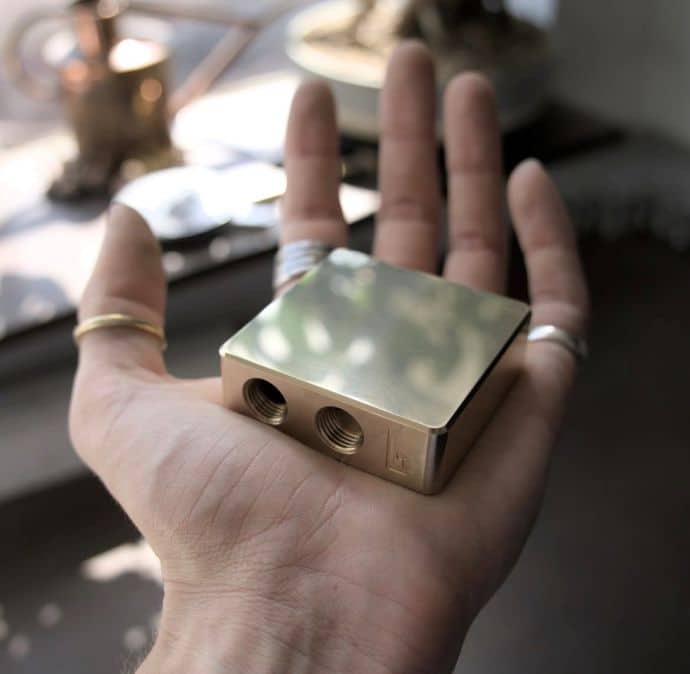
OCC: What about that DDC water-cooled pump?
Felix: It was a lot of fun to design! We currently have no real interest in producing consumer products. We like to solve specific niche problems with the right combination of beauty, fun, and engineering. However, it worked much better than we imagined, which makes us very happy.
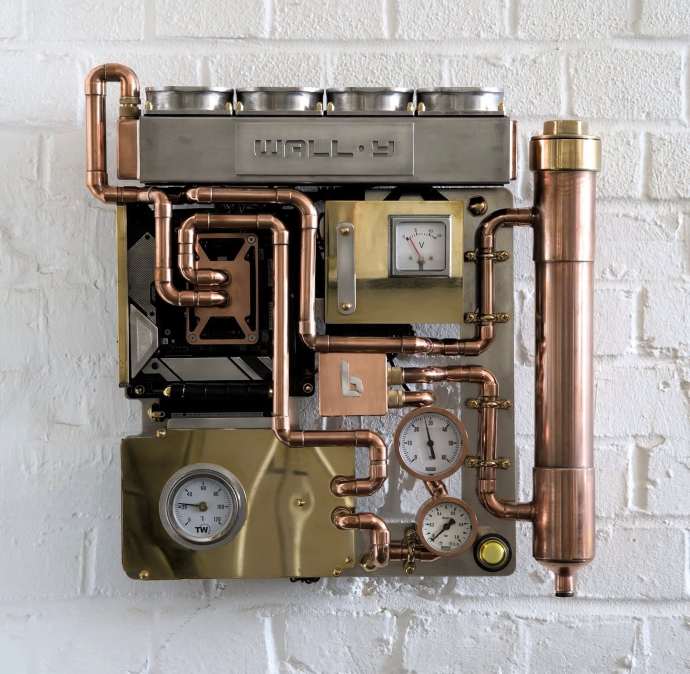
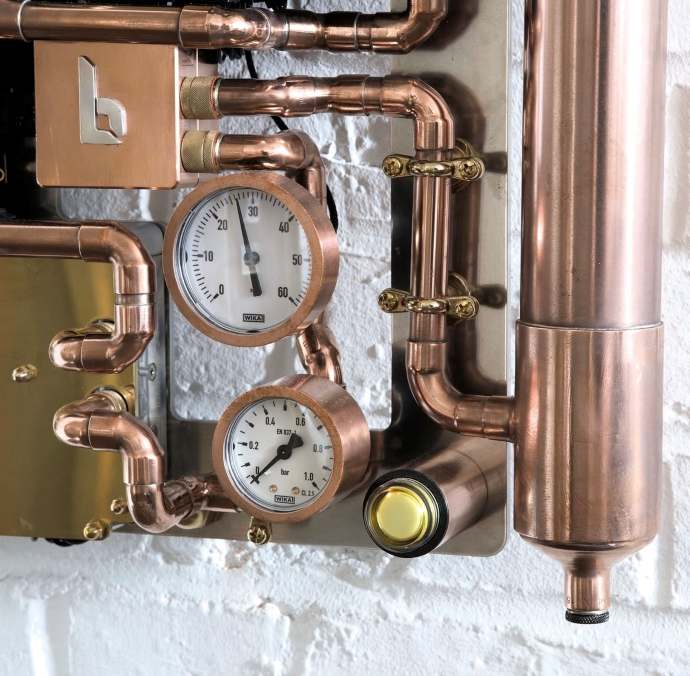
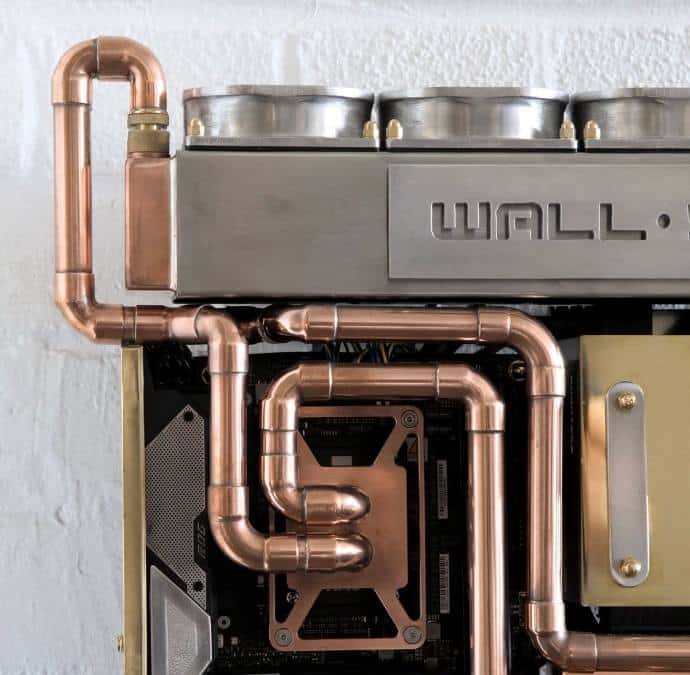
OCC: Wall-Y is your personal PC. How is it doing today?
Felix: It’s doing great, making every day a little more enjoyable. I press the button, the fans start up, the pressure and voltage gauges come to life, and the day can begin. It effortlessly handles CAD work, video editing, and 3D scanning. Plus, it’s perfect for a little relaxing gaming session if I feel like it.
Billet Labs : The Future
Today, Billet Labs offers a small range of components (all very original) and assembly services. During our conversation, Felix hints that he’s just getting started. The future of the company looks exciting.
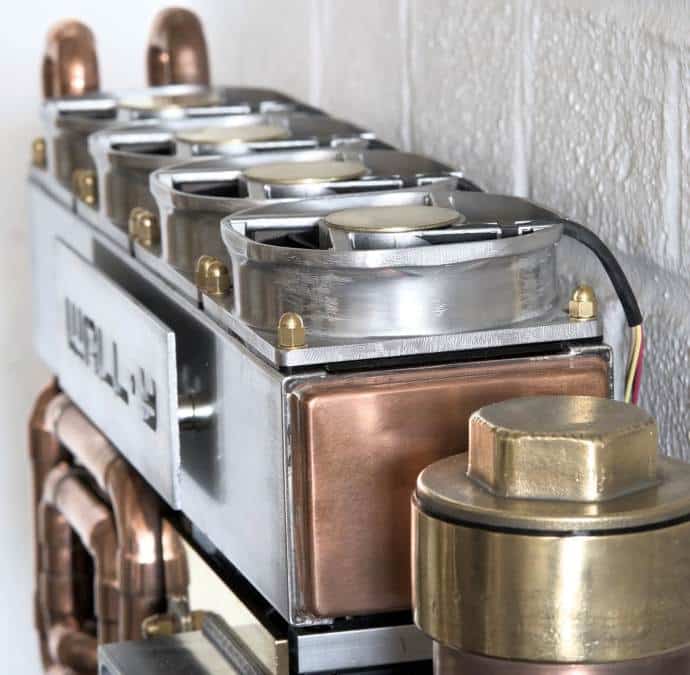
OCC: Are you going to create a new water block? Or a new monoblock?
Felix: Absolutely . We’ve been working on a CPU waterblock for almost two years. We’ve made about twenty prototypes and are finally approaching the point where we can launch it. Our goal was to create the most powerful CPU waterblock in the world. And we think we may have succeeded. This waterblock is what has slowed down all the other products we want to release, because getting the cold plate right is the most critical element — and it’s incredibly difficult! But we’re almost there. Once it’s available and working perfectly, we already have the design for the world’s smallest CPU waterblock/DDC pump combo, as well as other even crazier projects that I can’t reveal yet. And Monoblock 2.0 is also in the works. It’s going to be huge.
OCC: Regarding the upcoming CPU waterblock, what will its compatibility be? AM5 and LGA1851?
Felix: AM5 only for now.
OCC: Same question for the monoblock. Will it be based on the RTX 5090?
Felix: More likely on the 6090 or an equivalent. We’re in no rush; we’ll release it when it’s perfect.
OCC: Do you have specific plans for the future of Billet Labs, or are you just going with the flow?
Felix: A bit of both. As I said, we’re developing our CPU waterblock. Once that’s finalized, it will unlock a lot of exciting new products. Our current range is very limited, so we’re eager to expand it significantly. The coming year will be divided between that and builds on YouTube. The next project, once the radiator is finished, will (hopefully) be the world’s smallest RTX 5090 build. This will take us back to our small form factor roots in a very exciting way.
Final thoughts
OCC: What is your favorite project to date?
Felix: I would say Wall-Y. The other builds were just as fun, but there was always that slightly sad feeling of having to let them go at the end. With Wall-Y, I get to enjoy the result of my work every day.
OCC: Last question: do you have any advice for people who like your work and would like to get into this kind of crazy machine building?
Felix: I would say the best thing to do is to stop thinking of PC components as the only things you can use in a PC. PC fans aren’t the only fans. PC radiators aren’t the only radiators. PC water cooling tubes aren’t the only tubes. And most importantly, PC cases aren’t the only things you can build a computer in. It’s easier than ever today, since you no longer need to install drives or expansion cards. If you can attach a motherboard, GPU, and power supply to something, you’re almost there, and you’ll have a unique build. Go for it and see how it turns out (if you can afford the RAM).
A huge thank you to Felix for his time. As you can see from reading this, his days are very busy. All that remains is to invite you to discover the work of these artists on the Billet Labs website and social media. You’ll discover creators who are as passionate as they are fascinating, and you’ll certainly leave with the desire to build an unusual PC.