
For some, the COVID pandemic can feel like a fever dream: six years have passed, and yet sometimes it feels like it just happened yesterday. Fishbowl, a slice-of-life story about a woman named Alo, plants you right in the middle of it, following her first month in a new city as the pandemic is just beginning.
As Alo feels isolated from her loved ones and grieves her recently-deceased grandmother, players will help her find solace over the course of a month through self-care, unpacking her past, and a bit of magical realism in the form of a wind-up fish toy. Polygon spoke with Rhea Gupte and Prateek Saxena, the two-person development team at imissmyfriends.studio, after playing through a new demo that encompasses Alo’s first three in-game days. The updated demo is available now, with the final game slated for release this April for PlayStation consoles and Steam.
In some ways, Alo’s day-to-day life is like that of many others during that time. She spends much of her time editing videos for her job (in the form of a delightful minigame), video chatting with friends and family, and sitting with isolation and grief. Other elements of her story are more atypical, like her budding friendship with Paplet, a fish toy she loved as a child. After receiving it in a box of things her grandmother wanted her to have, she discovers she can talk with them, and it serves as a window into her past.
The game’s name originates from an art project Gupte created in 2020 about isolation called “Building Floors are Fishbowls.” The duo also cited Studio Ghibli films, particularly Only Yesterday, and the game To the Moon as being particularly influential. The character of Paplet, though, was inspired by swimming fish toys Saxena used to buy for his father.
Fishbowl has been a long time coming for Gupte and Saxena, who first began the project in the midst of the pandemic. “We wanted to create something that, even during a very melancholic and dark time, could be a ray of hope,” Gupte said. The developers intended that people could take from the game a sense of belonging and community, and learn how, even when you’re isolated and not doing well, there are little things that you can do to get through the day.
The duo worked on Fishbowl part-time for two and a half years, but eventually decided to take the plunge into full-time development after seeing how the game was resonating with people online. Though it draws from some specific aspects of Gupte and Saxena’s own experiences growing up in India, comments on the original demo quickly demonstrate how it had an impact on players regardless of their background.
“I have a post-it on my desk that says that you have to feel like you’ve given it your all when the game releases,” Gupte said, “There should be nothing left in you, and that’s literally what we’ve tried to do with Fishbowl. When it comes to sincerity, Gupte feels that the game resonates with people because human experiences are so similar, regardless of their country or experiences with grief and loss.
The game takes place only one month after Alo’s grandmother — whom she affectionately called Jaja — passed away, and grief is a constant spectre in both Alo and her mother’s lives. When Alo learns her mother wants to throw away Jaja’s old possessions to achieve closure, she volunteers to go through it all instead. These boxes take up large sections of Alo’s apartment, each one a small time capsule into her shared past with her grandmother. Fishbowl may remind some players of Unpacking in this mechanic, though going through each box is a small puzzle rather than placing things on shelves.
The game largely takes place within Alo’s house, but she’ll also travel to dreamscapes and memories as a way to move the narrative forward, and these can be both wholesome and heartbreaking. The dream sequence I saw in the demo was much more the latter, focusing on her last memories of her grandmother and a childhood passion for poetry writing that was slowly extinguished by the weight of the world. Gupte explained that Alo won’t have dreams every night; rather, certain memories can trigger dreams over the course of the game.
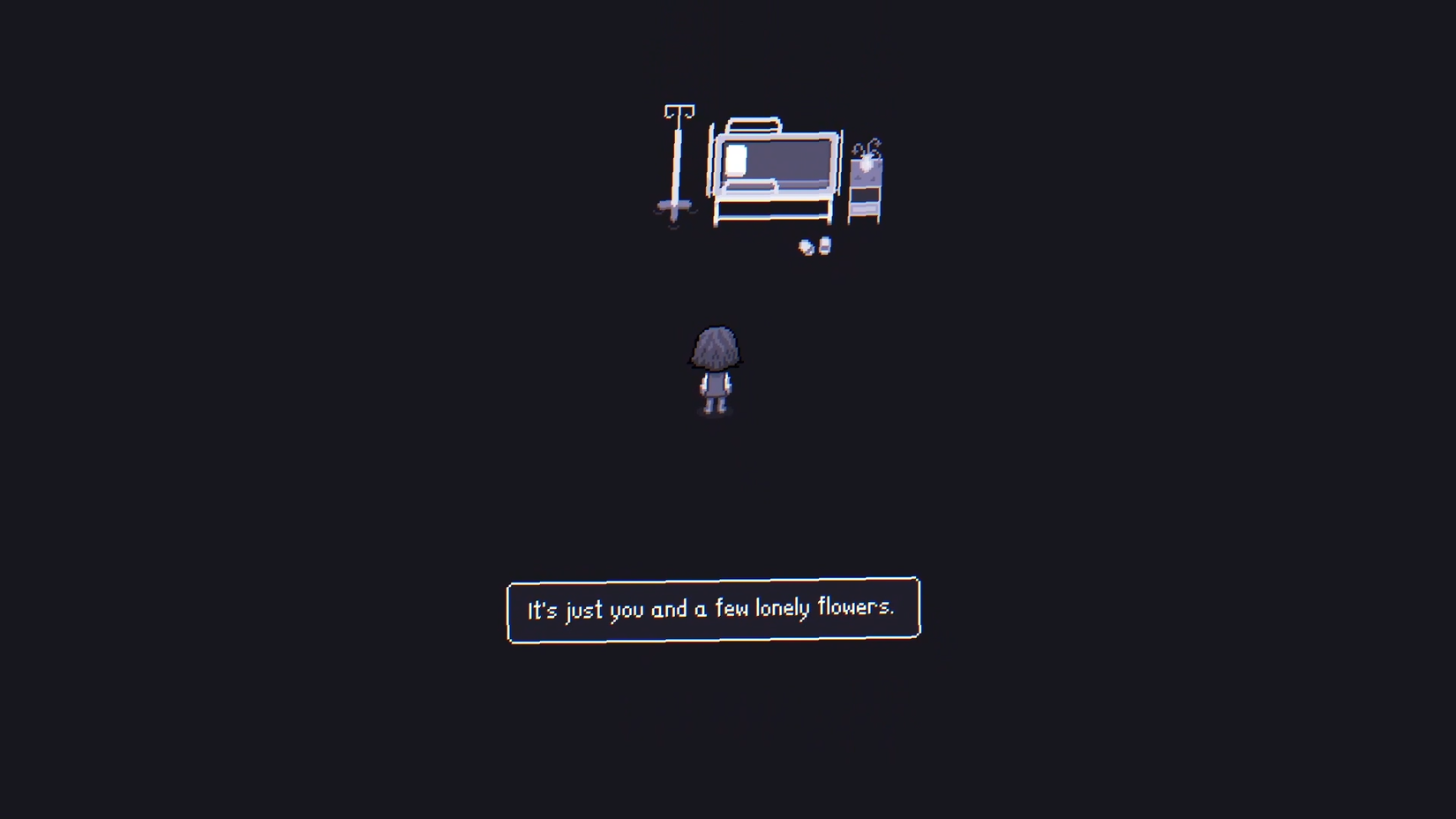
As a toy Alo took everywhere as a child, Paplet is the key to unlocking these memories. Serving as an antidote to the aforementioned dream on the first night, Paplet transports Alo back to a memory of picking flowers for her grandmother in the park. These memories will also compel Alo to write poetry again. “She’s still not comfortable with doing it,” says Saxena, “but it comes back over and over again as a theme in the game.”
The poetry was one of the most impactful recurring themes in the three days I’ve spent in Alo’s life. From a childhood flashback of Alo’s family being proud of her writing to crumpled-up stanzas on a hospital floor about the heartache of the waiting room, it’s clearly an important outlet for Alo that she’s pushed down over time. Watching her begin to discover herself again, even over just a few days, was heartening.
Saxena remembered that, after James Tillman from Wholesome Games played the demo, he said that the best parts of this game are hidden. “Since then,” he added, “we’ve been trying to make certain things a bit more visible to the player.” Fishbowl won’t be showing all its cards by any means, though — it’s up to the players to uncover all the little secrets.
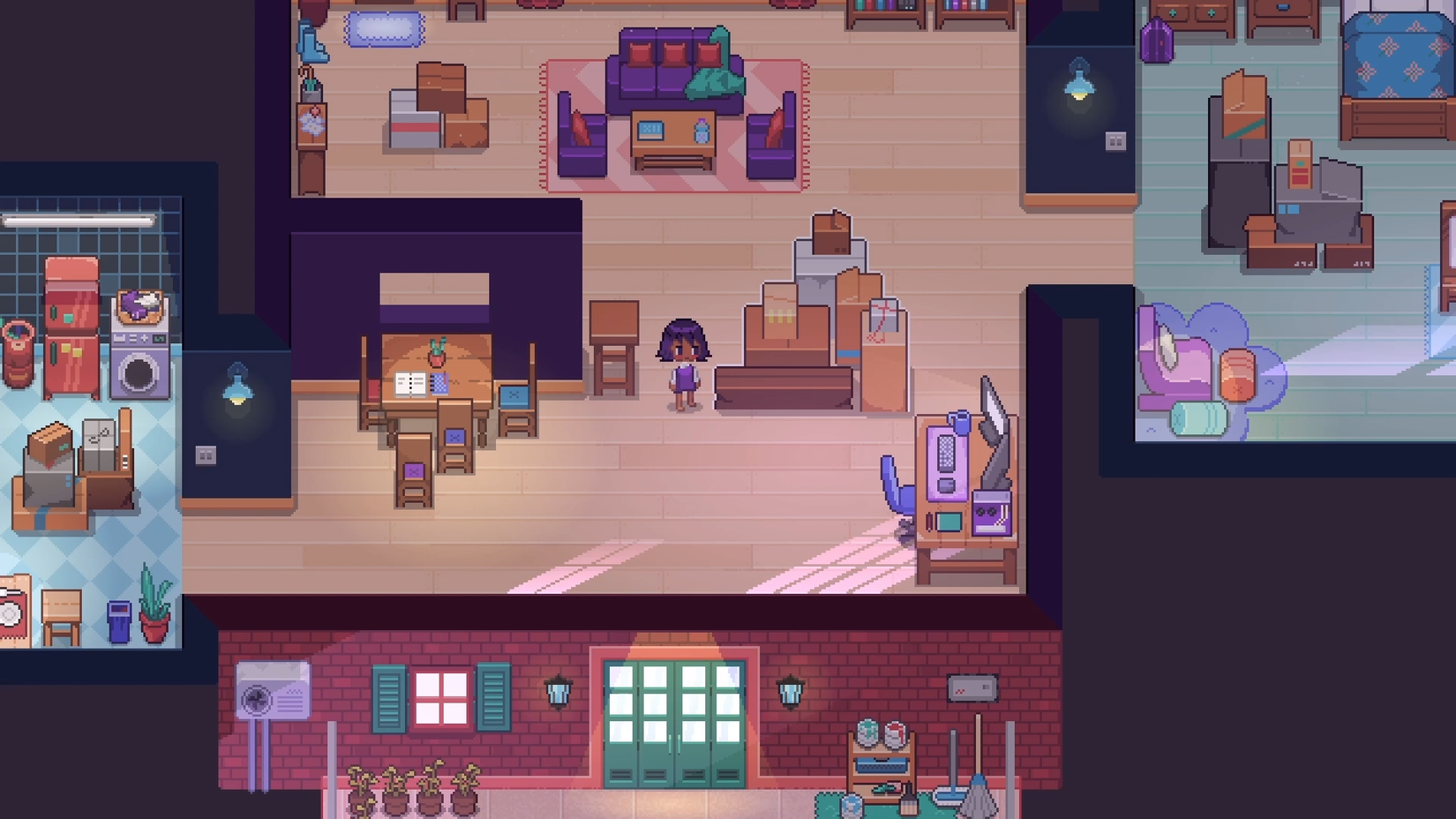
Tiny discoveries are everywhere in Fishbowl. Even in my short play time, I was consistently delighted at the little ways I’d found to alter Alo’s mood, which appears as a meter over her head. A tasty microwave samosa may raise your spirits, but an emotionally heavy phone call can drag them right back down.
Every day, there are lots of these little choices players can choose to pursue or not, many of them the sorts of things that can feel insurmountable during bouts of bad mental health, like doing the dishes or taking a shower. The mood meter is both Alo’s motivation and a tracker of her emotional well-being. “We tried to relate to a very real feeling,” Gupte said. “If you’re feeling low, it’s so much harder to do the thing that’s going to make you feel better.”
I experienced this a few times during the demo playthrough: Alo wasn’t up to writing poetry when I suggested it, nor was she able to take care of her plants, even though she wanted to.
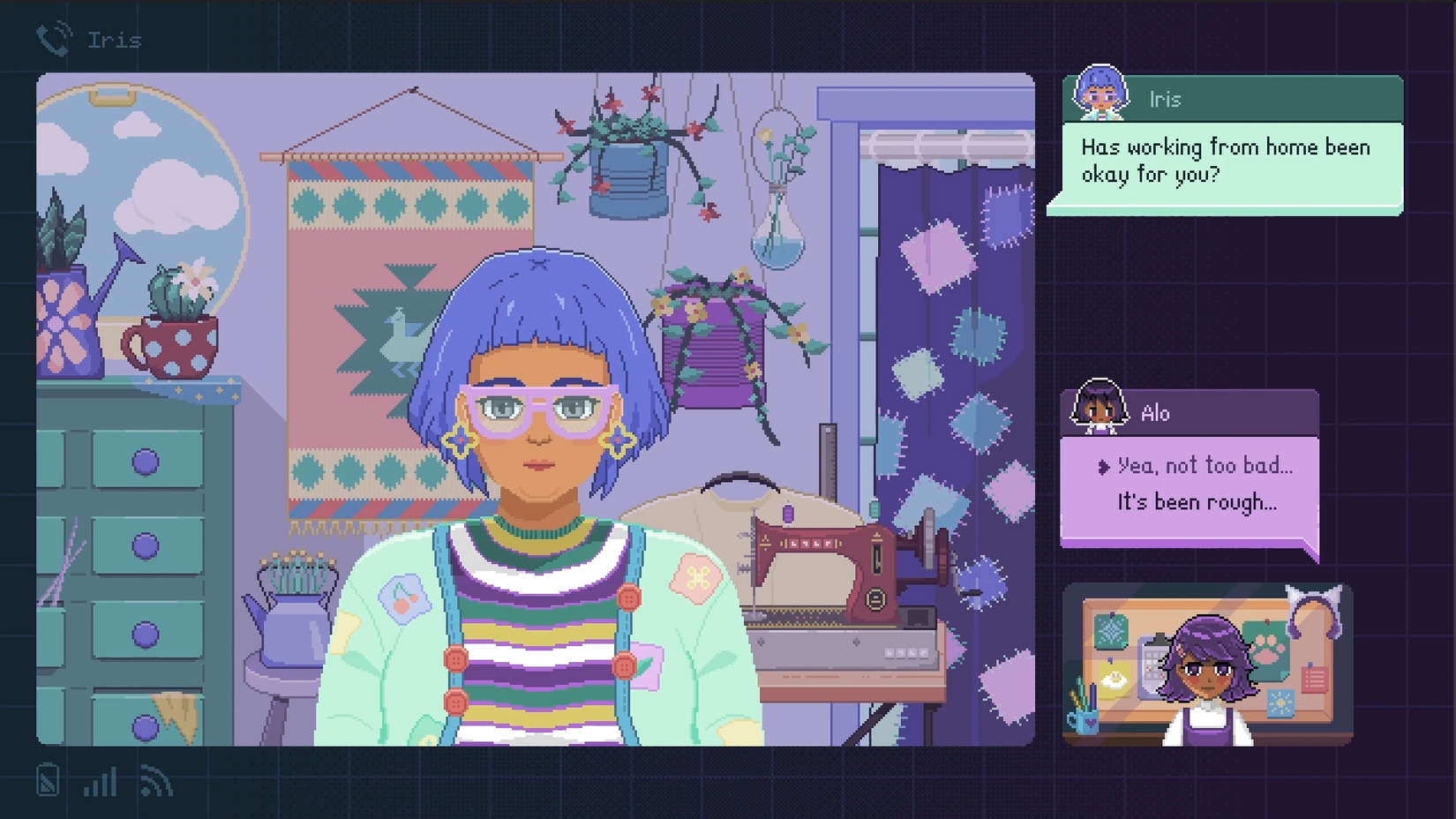
Alo’s mood meter is also a key part of the storytelling in Fishbowl, as it will determine what responses she can give during branching conversations. In a chat with her mother on a bad day, for example, she could be entirely pessimistic about her job and speculate about getting fired; on a good day, she might speak highly of her own accomplishments, or at least acknowledge them.
This affects the level of intimacy Alo shares with people in her life, and in turn what ending players will receive. Saxena says that there are no obligately bad endings, however, only ones that are fitting for how you’ve been playing the game. A playthrough will take players approximately seven to 14 hours, depending on their reading speed and how much they choose to do with Alo each of the 28 in-game days.
Fishbowl feels like an act of radical sincerity and optimism in a weary world, and the duo behind it couldn’t be more excited about the new extended demo and subsequent full release later this year. “It still feels so surreal that we’ve made this, and it’s going to go out in the world soon and people will have the chance to play it,” Gupte said, “I hope that they see all the little bits and pieces that we put in.”